
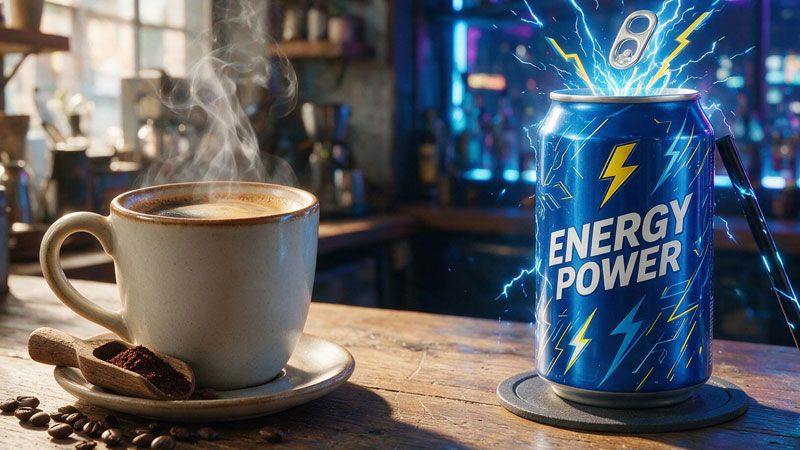
For many of us, coffee is about more than caffeine. It’s the first quiet moment before the day begins, a catch-up with a friend, a chat with a colleague, or a welcome pause between meetings. It brings people together, starts conversations and, for plenty of households, it’s simply part of the daily routine.
The good news is that enjoying a few cups of coffee each day isn’t something most people need to feel guilty about. Over the past decade, research has consistently shown that moderate coffee consumption can form part of a healthy lifestyle for most adults. In fact, studies have linked it to a lower risk of several long-term health conditions, including heart disease, type 2 diabetes and some neurological conditions. So if you enjoy your morning coffee, or even a second cup later in the day, there’s little reason to second-guess that habit.
Energy drinks are a very different story.
Medical experts continue to raise concerns about high-caffeine energy drinks because they affect the body differently from coffee. While coffee contains hundreds of naturally occurring plant compounds alongside its caffeine, energy drinks typically deliver a concentrated dose of caffeine, often combined with large amounts of sugar and other stimulants.
Research has shown that these drinks can cause significant increases in blood pressure and have been linked to heart rhythm disturbances, even in otherwise healthy young adults. These findings have become consistent enough that healthcare professionals now recommend caution, particularly for people with existing heart conditions or those who regularly consume multiple energy drinks.
What this means for you
- Enjoy your coffee in moderation. For most healthy adults, it’s a habit that research continues to support.
- Not all caffeine affects the body in the same way. The source, concentration and what accompanies it all make a difference.
- Be cautious with energy drinks, especially if you have high blood pressure, a heart condition or a family history of heart disease.
- Don’t ignore symptoms such as a racing heart, palpitations, chest discomfort or feeling faint after consuming an energy drink. If these occur, seek medical advice promptly.
The next time you reach for a caffeine boost, it’s worth remembering that a cup of coffee and an energy drink aren’t simply different versions of the same thing. They may both contain caffeine, but that’s where many of the similarities end. One has decades of reassuring research behind it when enjoyed in moderation. The other continues to raise questions that doctors and researchers are taking seriously.
If you’re finding yourself relying on caffeine to get through the day, or struggling with stress, poor sleep or low energy, speaking to a NMG SmartAssist Programme counsellor can help you explore what’s really behind it. The service is confidential and available at no cost.